
Why Plasma Polishing Is Ideal for Dental and Medical Precision Parts
Published2026-08-08






Published2026-08-08
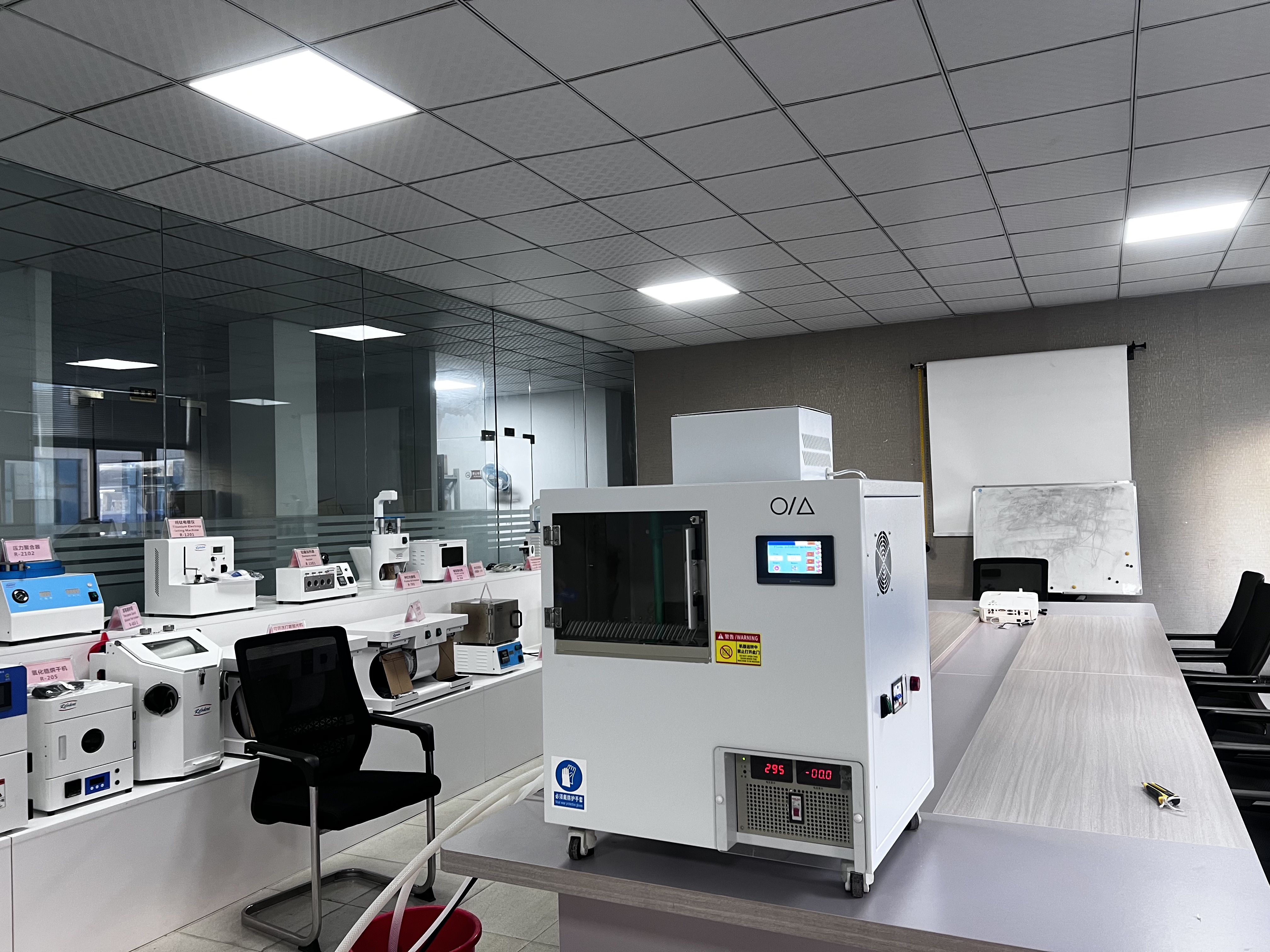
Dental restorations — crowns, frameworks, implants — and medical devices such as surgical instruments and implants demand exceptionally high surface quality. Surface roughness affects not only aesthetics, but also patient comfort, biocompatibility, and even the risk of infection.
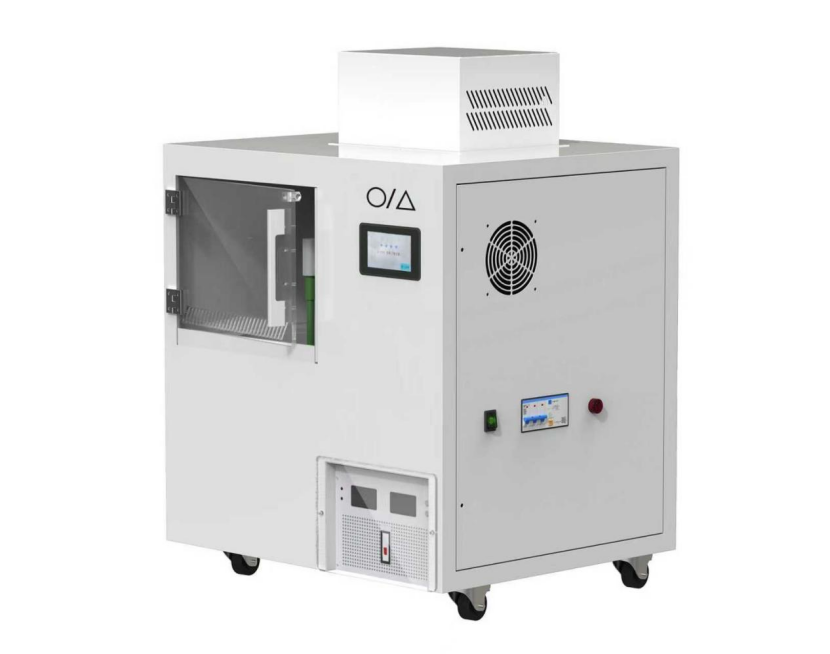
(OLA plasma polishing machine for dental and medical metal parts surface finishing)
Traditional manual buffing with cloth wheels and abrasive pastes has long been the go-to finishing method for dental laboratories and medical device manufacturers. However, this approach comes with several critical limitations:
Low efficiency – A single part can take 30 to 60 minutes to polish, relying heavily on skilled craftsmen
Inconsistent results – Hand polishing makes it difficult to achieve uniform surface quality across an entire batch
Deformation risk – Thin-walled parts (such as crown margins and delicate surgical instruments) are prone to distortion or overcutting during mechanical grinding
Labor shortages – Polishing is physically demanding and often carried out in harsh conditions, making it increasingly difficult to attract younger workers
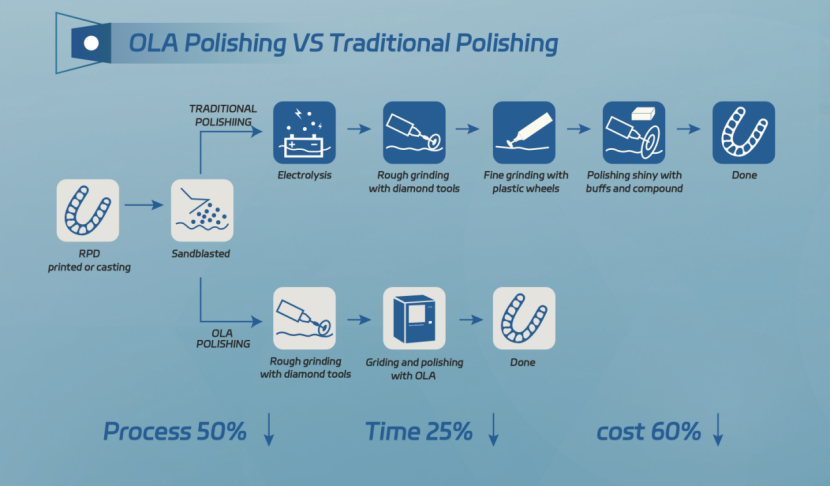
Plasma Polishing: A Better Solution for Metal Surface Finishing
Plasma polishing — also known as nano-polishing or electrolyte plasma polishing — is an advanced metal surface finishing technology that uses physicochemical plasma reactions to achieve superior surface planarization.
The core principle: In a high-temperature electrolyte solution, the workpiece is connected as the anode (positive electrode) to a DC power supply. Under a high-voltage electric field, a vapor gaseous envelope (VGE) forms around the workpiece surface. The plasma preferentially attacks and dissolves microscopic surface protrusions through localized etching, resulting in global planarization. This is a "surface-wide" process rather than point-by-point treatment — regardless of how complex the part geometry may be (including internal cavities, crevices, and threads), uniform polishing is achieved.
Why Plasma Polishing Is Particularly Suitable for Dental and Medical Applications
✅ Broad material compatibility – The OLA plasma polishing machine handles the three materials most commonly used in dental manufacturing and medical device manufacturing: Cobalt-Chromium (CoCr) , Stainless Steel, and Titanium Alloys. A single machine covers everything from dental crowns and dental implants to surgical instruments and orthopedic implants.
✅ No deformation, no residual stress – As a non contact process, electrolyte plasma polishing applies no mechanical cutting forces. Thin walled components, slender parts, and porous structures (such as 3D printed porous titanium implants) can all be processed safely.
✅ Nanometer scale precision – Material removal depth is only 0.3 to 1.5 nanometers, allowing surface roughness (Ra value) to be reduced to the nanometer range, achieving a true mirror finish and mirror-like surface quality.
✅ Eco friendly and safe – The process uses non toxic, environmentally friendly polishing media that fully complies with international environmental standards, including those in the EU market. In one documented case, a worker's daily output of dental metal frameworks increased from 13 to 30 pieces — a productivity gain of over 40%.
✅ High-volume batch processing – Each cycle handles 3 to 12 parts in just 10 minutes, with consistent, repeatable results across batches, delivering high-precision metal polishing for medical-grade surface treatment.
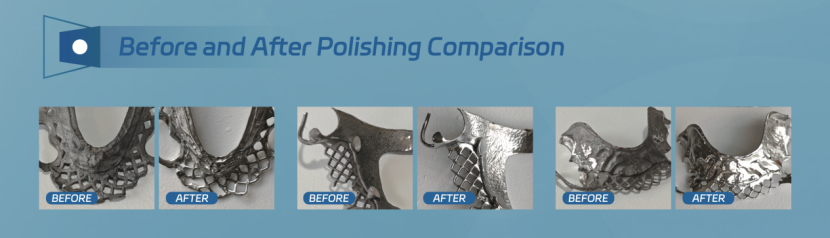
Technical Highlight
For example, in the polishing of dental frameworks, a small scale plasma polishing system typically processes 2 to 3 frameworks per cycle, with a polishing time of 8 to 12 minutes. The OLA system builds on this foundation with further optimization, delivering higher throughput and even more stable performance in shorter cycle times.
Interested in finding out if the OLA plasma polishing system is right for your products?
DM us — we offer free sample processing trials and free test polishing services!
#PlasmaPolishing #MetalSurfaceFinishing #DentalLab #DentalManufacturing #MedicalDeviceManufacturing #CoCrAlloy #CobaltChromium #StainlessSteelPolishing #TitaniumAlloyPolishing #DentalCrowns #DentalImplants #SurgicalInstruments #OrthopedicImplants #SurfaceRoughness #MirrorFinish #MedicalGradeSurfaceTreatment #HighPrecisionPolishing #ElectrolytePlasmaPolishing #SurfaceTreatmentTechnology
Printing Is Only the First Step — How a Chinese OEM Manufacturer Empowers Metal Additive Manufacturing
2026-08-13
Plasma Polishing Technology Accelerates European Expansion – OLA Enters Strategic Partnership with French Distributor
2026-08-04
OLA New Website Launch | Clearer Selection Path, More Practical Printing Solutions
2026-08-01
Why Plasma Polishing Is Ideal for Dental and Medical Precision Parts
2026-08-08